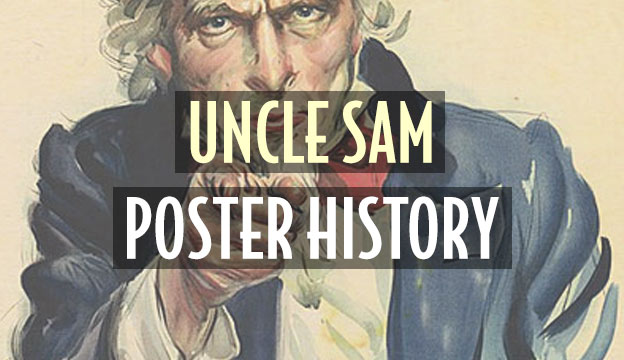
Each generation might produce only a few truly iconic images that cement their place in history and are never forgotten. Actually, there might not be another poster in all of American history as instantly recognizable as Uncle Sam pointing straight at the viewer and declaring, “I Want YOU for U.S. Army.”
The stare is intense. The finger is impossible to ignore. And somehow, more than a century later, it still feels like Uncle Sam has picked you out of the crowd and is questioning your manhood with a simple gesture. (or, is that just me?)
Created during World War I, the famous Uncle Sam poster became much more than a military recruitment advertisement. It helped define the modern image of America, influenced generations of political art and advertising, and became one of the most copied and parodied images in American culture.
So, who is this authoritative distant relative of yours, and why does he want you? Here is the fascinating story behind Uncle Sam and the famous “I Want YOU” poster, and how it became America’s first viral meme.
Uncle Sam poster: Who was Sam? | Origin & history | Artist | Meaning | Viral meme | Propaganda?
First, Who Is Uncle Sam?
Uncle Sam is basically the personification of the United States government, and gives a human face to the country. That way, when we go to war or collect taxes, it’s just old Uncle Sam, and not a massive, anonymous, and innefficient government agency.
I mean, Sam is pretty strict, but he’s our tall, commanding uncle, so we should probably do what he says!
Anyway, Uncle Sam existed long before he was featured on the famous “I Want YOU” poster. In fact, decades before he starred in the famous poster, Uncel Sam’s name was first connected to Samuel Wilson, a meatpacker from Troy, New York, who supplied food to American troops during the War of 1812. Back then, barrels of meat were stamped with the initials “U.S.” to show that they belonged to the United States.
According to the popular story, workers and soldiers jokingly claimed that “U.S.” stood for “Uncle Sam,” referring to Samuel Wilson. This wasn’t just a rumor, and the connection became so widely accepted that Congress officially recognized Samuel Wilson as, “the progenitor of America’s national symbol of Uncle Sam” in 1961.
The Uncle Sam character survived in American pop culture for decades, and then in the late 1860s, a political cartoonist named Thomas Nast began popularizing the now familiar image of Uncle Sam, drawing him as a combination of Revolutionary War figures Brother Johnathan and Yankee Doodle:
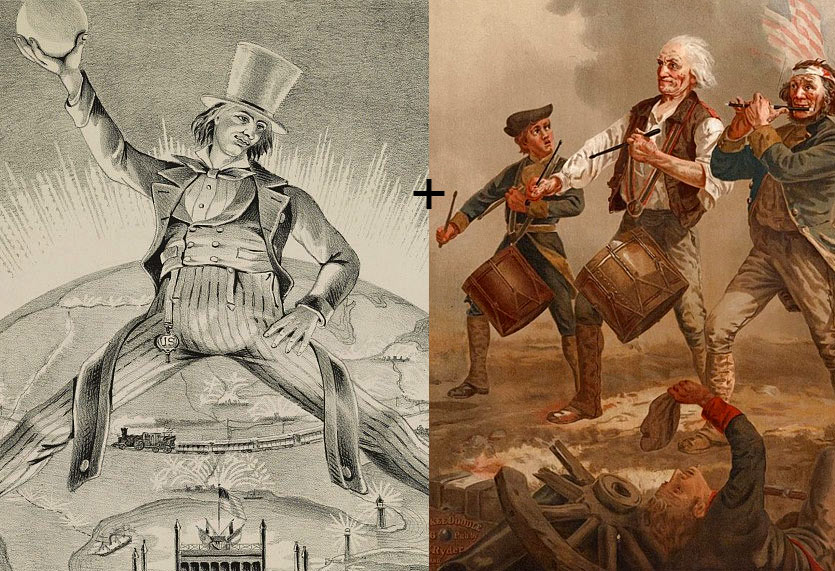
Uncle Sam’s appearance as a tall, thin older man with white hair, a goatee, and patriotic clothing continued to evolve over time, but he wasn’t truly an American icon until decades later when James Montgomery Flagg gave him the unforgettable look we recognize today.
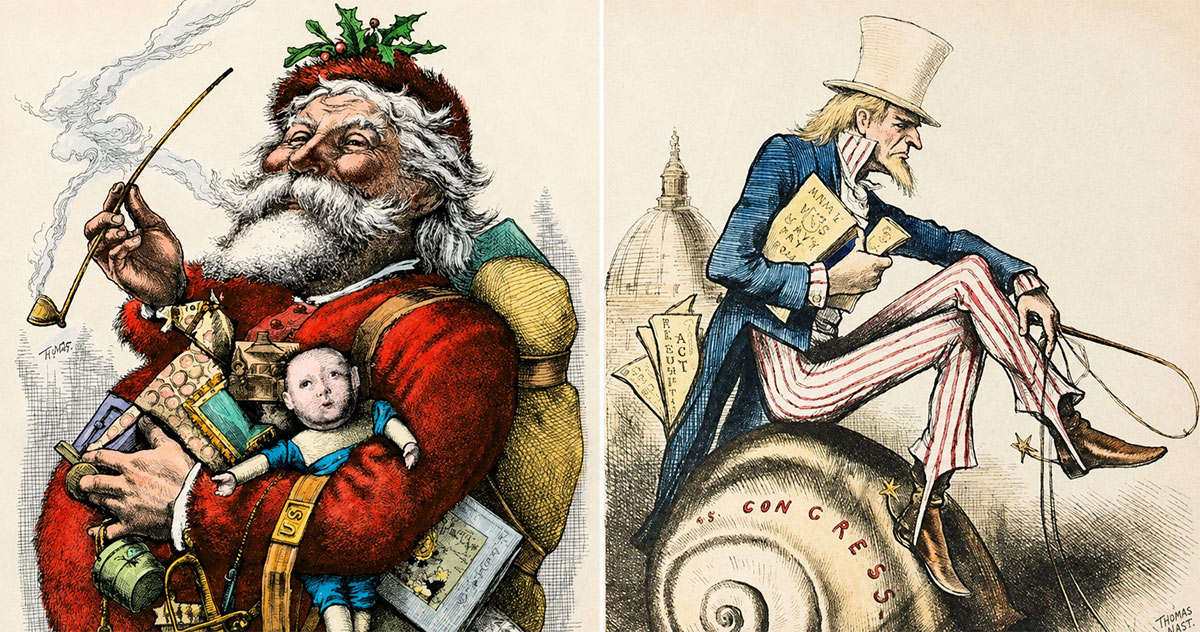
Fun fact: Did you know that early Uncle Sam creator, Thomas Nast, is also credited with creating the modern image of Santa Claus?!
The Origin of the “I Want YOU!” Poster
Surprisingly, the famous Uncle Sam image did not begin as an Army recruitment poster.
James Montgomery Flagg first created the illustration for the July 6, 1916, cover of Leslie’s Weekly, a popular illustrated news magazine.
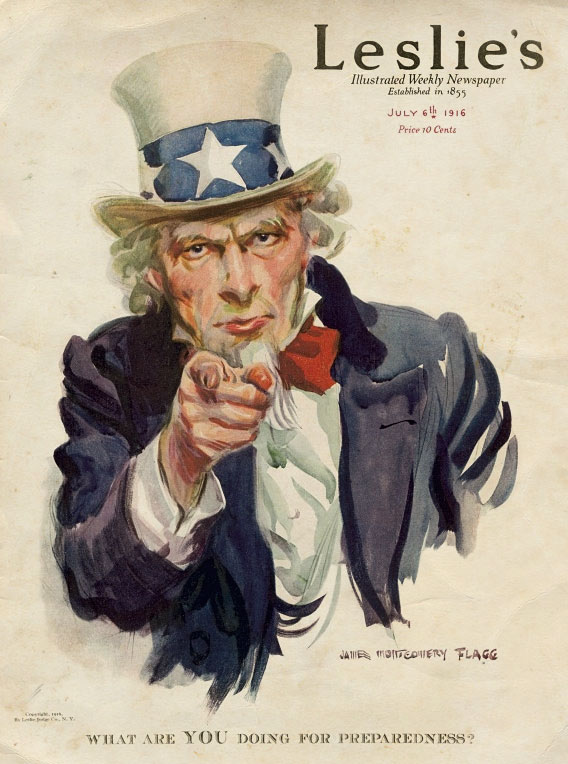
In that original version, Uncle Sam pointed directly at the reader beneath the question:
“What Are You Doing for Preparedness?”
At the time, the United States had not yet entered World War I. The war had been raging in Europe since 1914, however, and Americans were passionately debating whether the country should prepare for possible military involvement. Flagg’s magazine cover transformed that huge national debate into a personal challenge.
Uncle Sam was not asking what Congress was doing. He was not asking what the president was doing. Instead, he was looking directly at the reader and asking, What are YOU doing?
That was a brilliant idea, and it made the image feel immediate and personal.
After the United States entered World War I in April 1917, the illustration was adapted into the now-famous recruitment poster, and the original question was replaced with the much more direct command:
“I Want YOU for U.S. Army.”
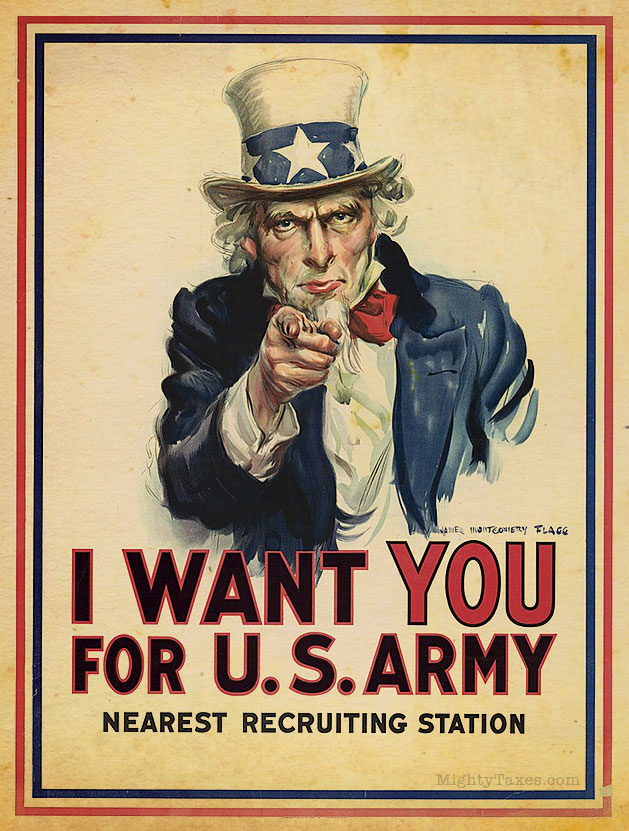
The bottom of the poster instructed men to report to the nearest Army recruiting station, and some versions included a blank area where the address could be added later by hand.
The Uncle Sam “I Want YOU!” poster appeared all across the country and quickly became one of the defining and famous American images of World War I.
Did you know? In 1917 and 1918, over 4 million Uncle Sam propaganda posters were printed! Nearly a century before social media, Uncle Sam went viral!
Inspired by a British Poster
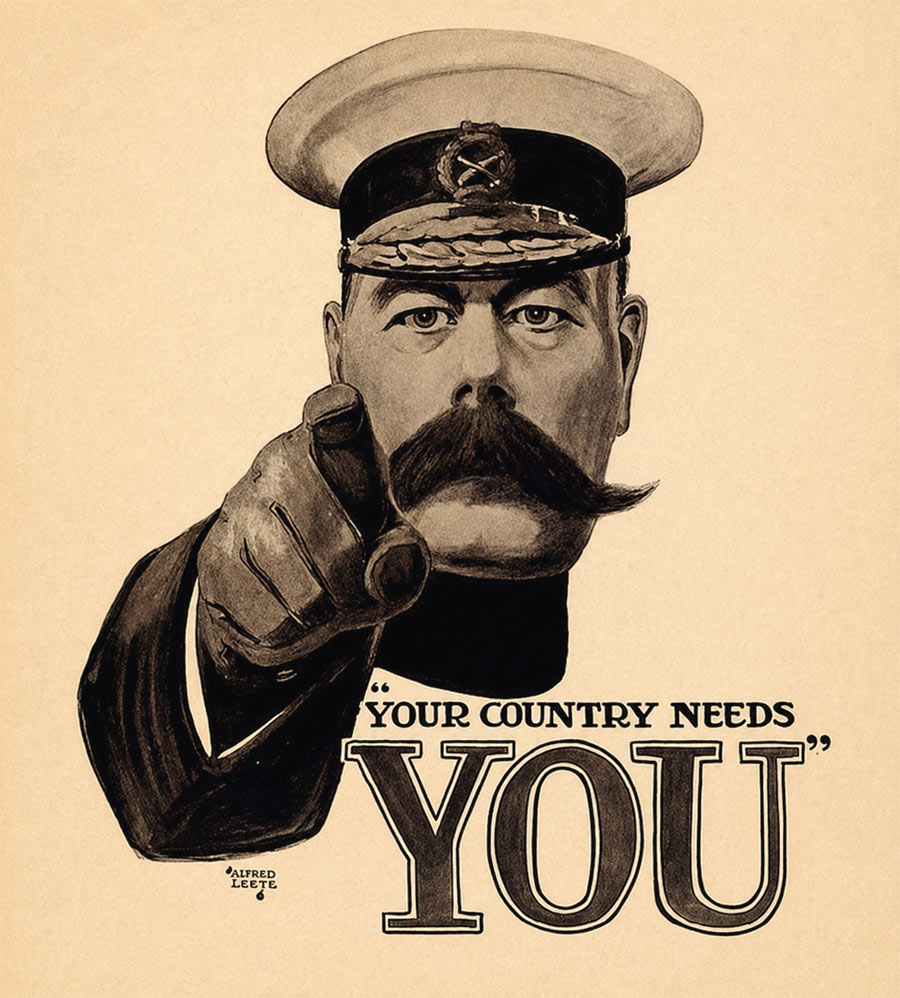
Yes, Flagg’s composition was strongly influenced by a British recruitment image created by illustrator Alfred Leete in 1914.
Leete’s image featured Field Marshal Lord Kitchener, Britain’s secretary of state for war, pointing directly toward the viewer. Kitchener was one of Britain’s most recognizable military figures, and the image appeared with recruitment messages including,“Your Country Needs YOU.”
The visual similarities are obvious.
Both figures stare directly at the audience, both extend a pointing finger beyond the edge of the image, and both make the viewer feel personally singled out.
The Kitchener design became one of the most famous British images associated with World War I, and Flagg borrowed that powerful visual formula and gave it a thoroughly American makeover.
However, instead of using a real military leader, he used Uncle Sam, the symbolic embodiment of the United States itself. That choice made the message feel even bigger. It was no longer simply a mortal general or government official calling for recruits. It was the nation personally asking for help.
The Uncle Sam Poster During World War I
When the United States entered World War I in 1917, the government suddenly needed to mobilize a huge military force and build public support for the war. To do so, they’d need to reach millions of young men quickly, but how?
Movies were still silent and Radio wouldn’t reach most households until the 1930s, so posters were commonly used as one of the most important communication tools of the era.
A plethora of posters already appeared in post offices, factories, train stations, schools, shop windows and public squares that competed for attention. Some encouraged men to enlist. Others promoted Liberty Bonds, food conservation, factory production and volunteer work.
Many World War I posters were colorful, crowded and dramatic. They showed heroic soldiers, frightened civilians, waving flags, or menacing enemies. Few were truly memorable.
Flagg’s first Uncle Sam poster was different.
There was no battlefield in the background. There were no marching troops or exploding shells. There was only Uncle Sam, the viewer, and one unforgettable question: Will you answer the call?
And, there was something new and different about Uncle Sam. He wasn’t your dad, and he wasn’t a stranger. He felt like a distant relative who commanded respect.
Uncle Sam is like that uncle who you only see at Thanksgiving. You know, the one who corners you in the kitchen, grabs your arm, and with hot whiskey-breath, asks if you’re going to be in the school musical again or man-up and try out for the football team. (sorry, is that just me?)
Anyway, the simplicity of its striking design helped the “I Want YOU” poster design stand out from the others. Its message could be understood in seconds, even from across a busy street or train platform. You also didn’t need much of an education to get Uncle Sam’s message. These qualities combined to make the poster one of the most effective pieces of propaganda in American history.
Uncle Sam Posters in World War II
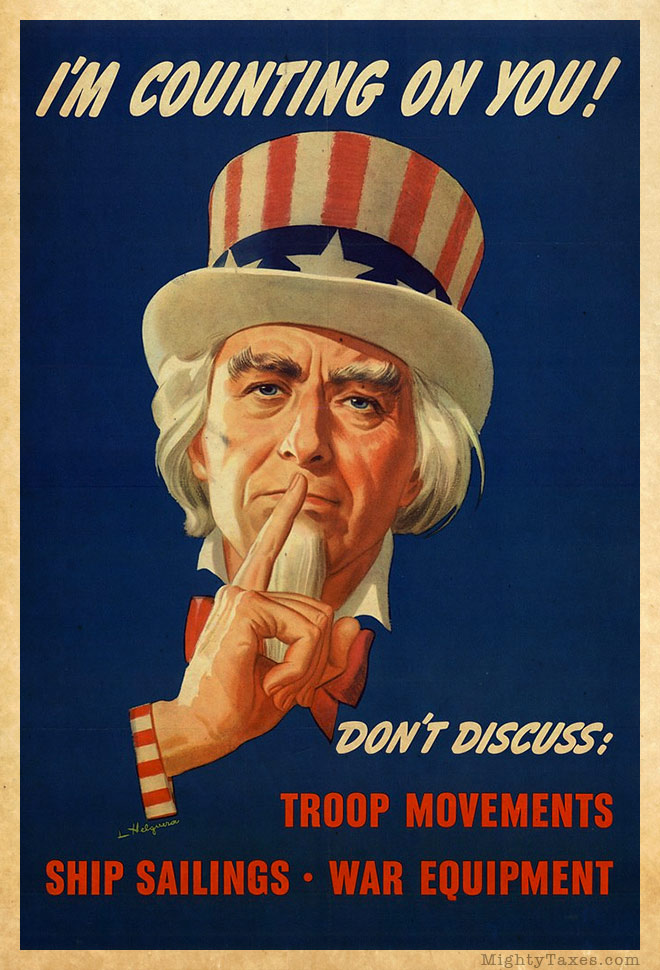
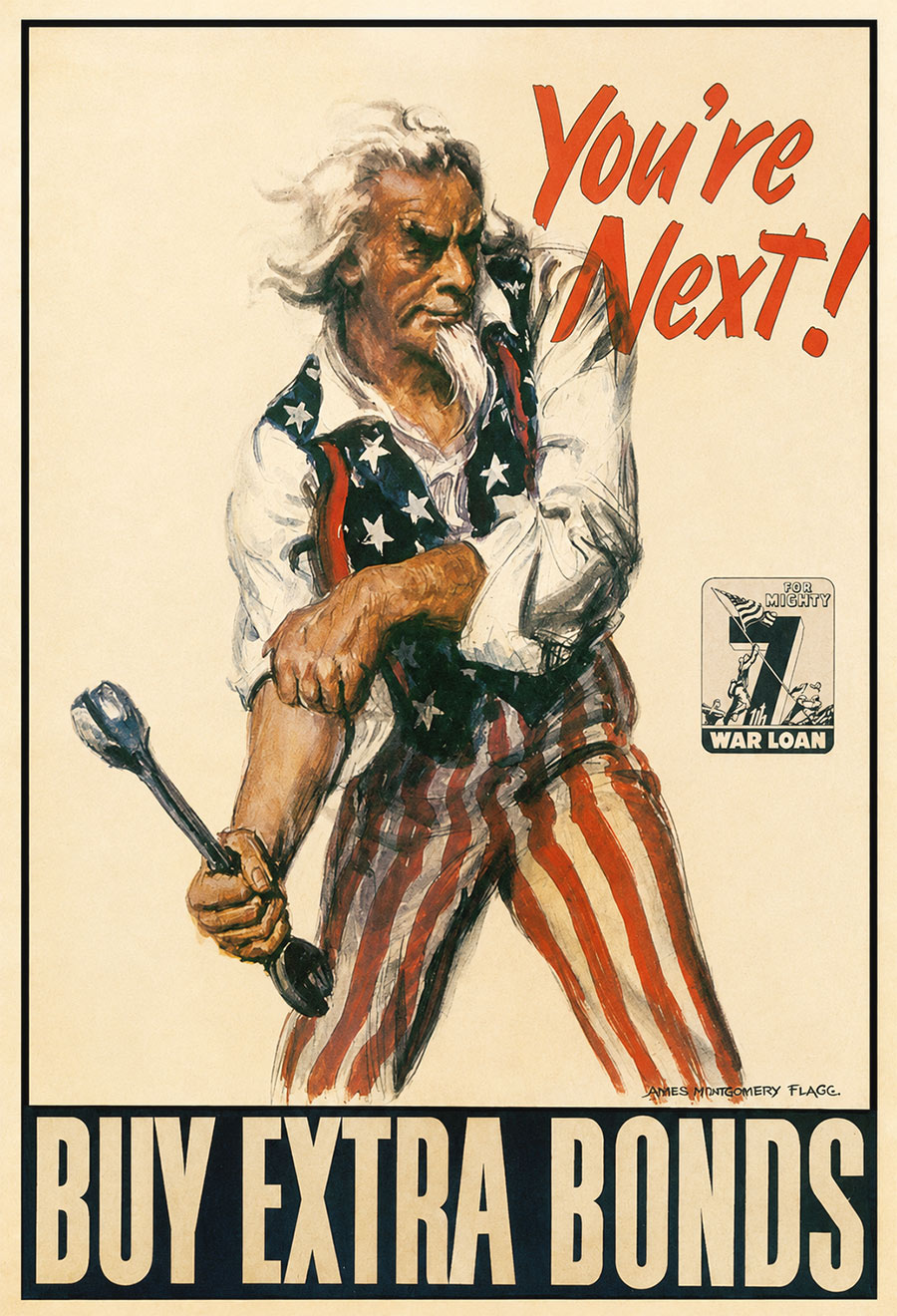
During World War II, Uncle Sam returned to posters across the country, once again serving as the unmistakable face of American patriotism. His stern expression and pointing finger appeared in recruiting campaigns, war-bond advertisements, and messages encouraging Americans to support the war effort.
The famous World War I image was simply too effective to retire, and its revival helped connect a new generation with the same powerful ideas of duty, sacrifice, and national unity.
For newer designs, James Montgomery Flagg hired Indiana-born Army veteran Walter Botts to pose as Uncle Sam. Botts reportedly modeled the strong shoulders, extended arm, and forceful pointing gesture that gave the character such commanding presence.
His involvement added a real veteran’s physicality to Flagg’s familiar symbol, helping Uncle Sam remain just as memorable and persuasive during World War II as he had been a generation earlier.
Who Created the Uncle Sam Poster?
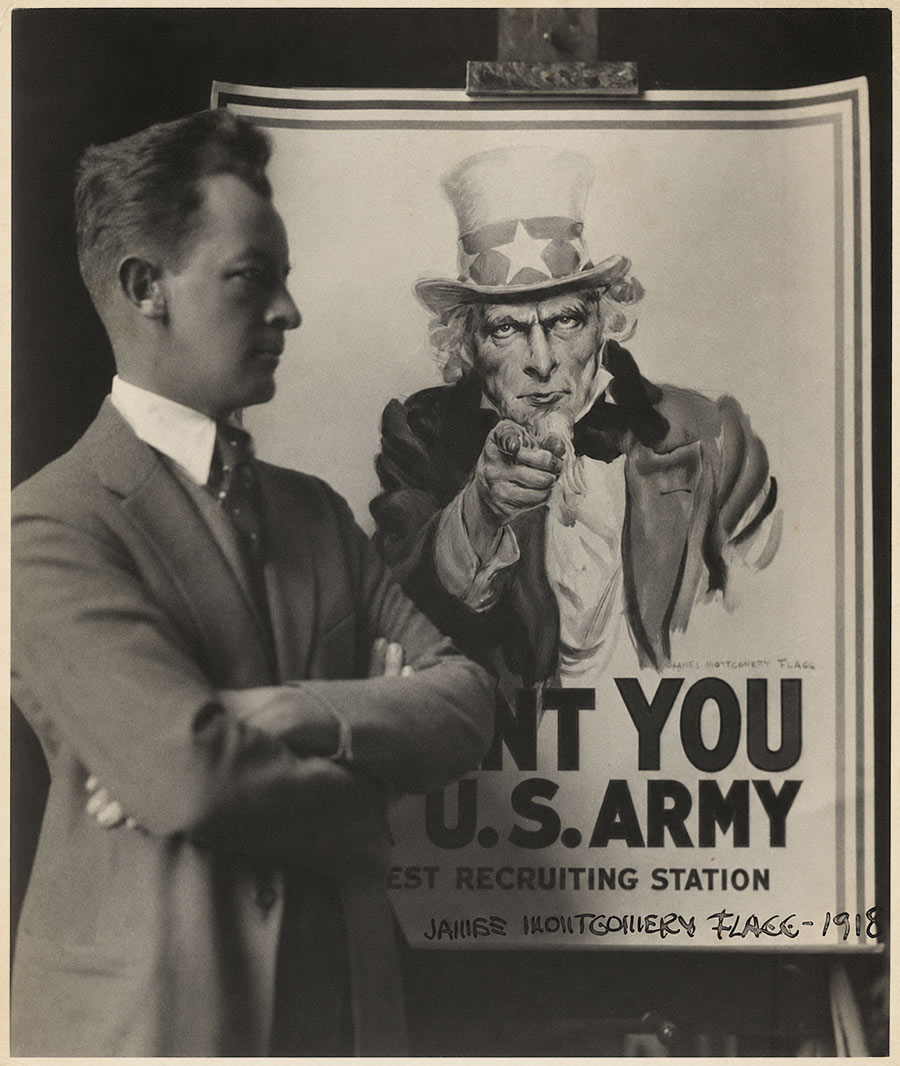
The Uncle Sam “I Want YOU!” poster was created by James Montgomery Flagg, one of the most talented and successful American illustrators of the early 20th century.
Flagg was born in Pelham Manor, New York, in 1877. He showed remarkable artistic ability at a young age and began selling illustrations while he was still a teenager.
Over the course of his career, his artwork appeared in major publications including Life, Judge and The Saturday Evening Post. He was known for his speed, technical skill and larger-than-life personality.
During World War I and World War II, Flagg created dozens of patriotic illustrations and government posters, yet none of them came close to matching the impact of his original Uncle Sam design. Flagg later called it “the most famous poster in the world.” That claim may sound a little boastful, but he was probably right!
To this day, few designs have been reproduced, imitated or recognized as often as the “I Want YOU” poster.
Whose Face Is On the Uncle Sam Poster?
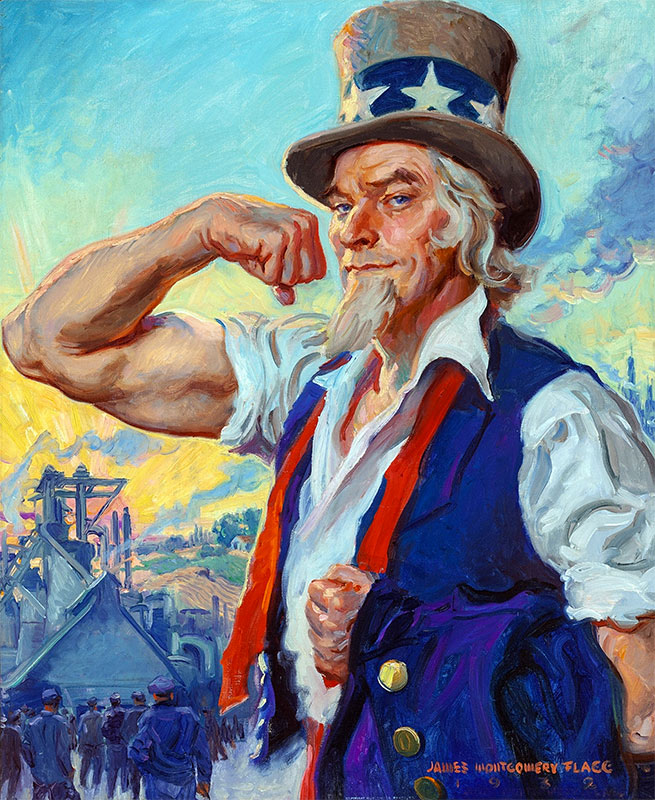
So, who was the inspiration for the old man behind the hat and beard? Surprisingly, James Montgomery Flagg’s famous painting of Uncle Sam is actually a self-portrait!
Rather than hire a professional model, Flagg based the character on his own reflection. He then aged his features by adding white hair, deep wrinkles, heavy eyebrows and Uncle Sam’s familiar pointed beard. This claim isn’t hearsay, either. It’s confirmed by the Smithsonian American Art Museum which identifies Flagg as both the artist and the sitter in the painting.
Not paying a model may have saved Flagg time and money, but it also allowed the famously conceited artist to feature himself in one of the most famous portraits of all time.
In fact, you could say that the Uncle Sam poster was the first American selfie to go viral!
Either way, you have to credit Flagg for giving incredible personality to his version of Uncle Sam, which looks nothing like many of the previous crude and cartoonish representations. His Uncle Sam looks like a real, slightly intimidating figure who has spotted you from across the room and is now expecting an answer to his urgent question.
Want to see Uncle Sam in person? Flagg’s original pencil-and-watercolor artwork is now preserved by the Smithsonian’s National Museum of American History and may be on display.
Did you know: James Montgomery Flagg was not paid for the iconic “I Want You” poster. He considered his wartime artwork a patriotic duty and donated a total of 46 poster designs to the U.S. government.
What Does the Uncle Sam Poster Mean?
On the surface, the poster’s meaning is simple: the United States Army wants the viewer to enlist. But the image works because it communicates much more than that.
At its heart, the Uncle Sam poster is about personal responsibility. It takes a massive international conflict and makes it feel like an individual decision by directly engaging the viewer with a stare and pointing gesture. Also, the most important and prominent word in the poster is not “Army,” it is “YOU.”
The word appears in large capital letters, while Uncle Sam points directly out of the image. Together, those elements create the feeling that the poster is speaking to YOU rather than an entire population. (yes, sir!)
The poster appeals to several powerful emotions:
- Patriotism: Uncle Sam represents the country itself.
- Duty: The viewer is encouraged to see military service as a personal responsibility.
- Urgency: The direct stare and pointing finger demand an immediate response.
- Pride: The poster suggests that the country needs the viewer’s help.
- Social pressure: Uncle Sam’s stern expression makes ignoring him feel almost embarrassing.
The I Want YOU! poster design does not explain the causes of the war or a political opinion. It does something much more direct: it makes the viewer a participant and encourages them to feel responsible for what happens next.
I Want YOU Poster: A Meme that Went Viral
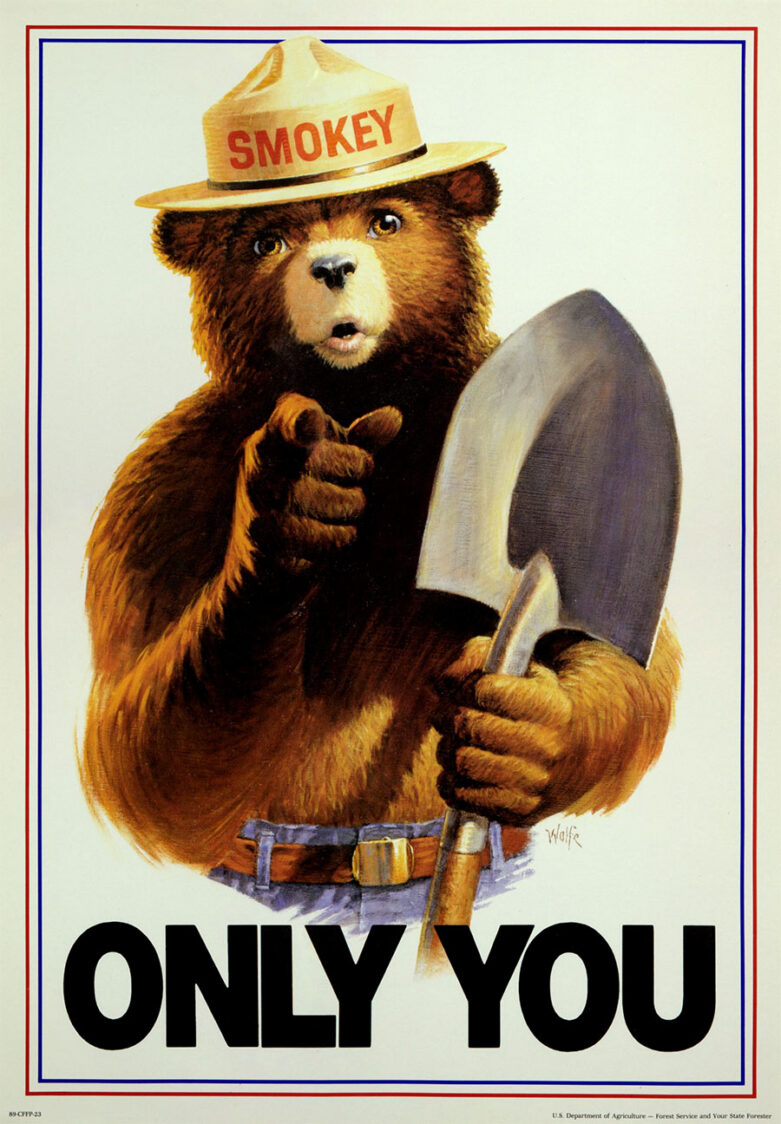
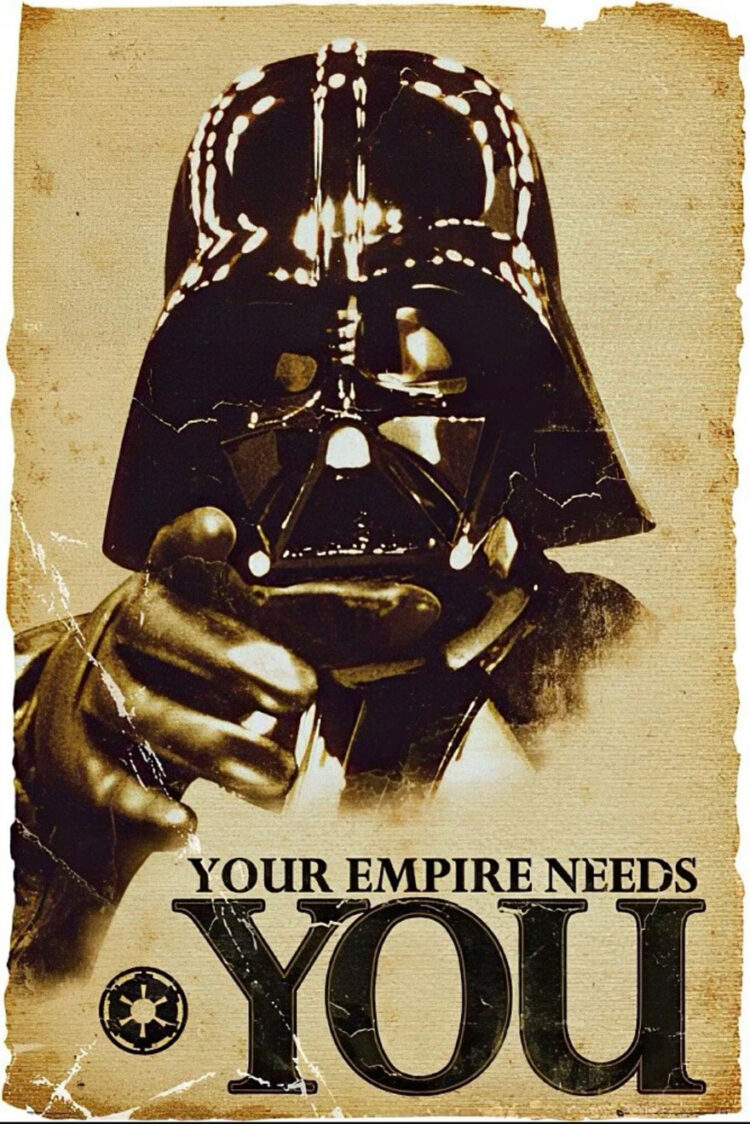
In many ways, Uncle Sam’s “I Want YOU” poster was one of America’s earliest memes, and the Smithsonian even described it as such. It’s an image so clear, bold, and instantly recognizable that it transcended temporary fame to be iconic.
The Uncle Sam poster was brilliant viral advertising because nearly every part of the simple design works perfectly:
- The pointing finger is especially effective, and it’s hard to not feel noticed or even judged.
- The eye contact is engaging, and he speaks directly to the viewer.
- The American branding through Sam’s patriotic red, white, and blue outfit on a white background makes him the personification of America
- The call to action is short, bold and easy to understand. There is almost nothing in the image to distract from the message.
Most importantly, the poster turns a national ad campaign into a one-on-one confrontation. Uncle Sam is not delivering a speech to a large crowd. He is speaking directly to you, son!
Long before social media, the poster was already doing what the best memes do: spreading rapidly, sticking in the public imagination, and becoming more famous than the original moment that created it.
That is why Uncle Sam has remained such a powerful force in pop culture. The image has been reworked for political campaigns, business advertisements, school posters, protest art, military recruiting, and countless parodies featuring presidents, celebrities, cartoon characters, and even Smokey the Bear!
Advertisers quickly recognized the genius of speaking directly to the viewer, and the poster helped popularize the now-familiar strategy of using eye contact, second-person language, and a strong call to action. More than a century later, Uncle Sam is still pointing, and people are still paying attention.
Is the Uncle Sam Poster Propaganda?
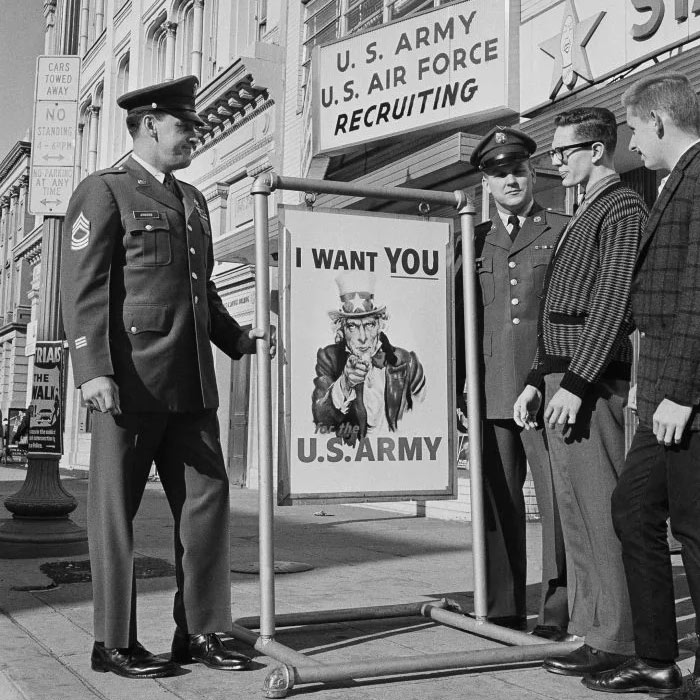
Yes. The “I Want You” poster is one of the most famous examples of American wartime propaganda.
Propaganda is communication designed to influence public attitudes or encourage specific behavior in support of a political or national goal. Flagg’s poster was created to persuade men to join the Army. It relies on patriotism, duty, pride and emotional pressure rather than detailed information.
Calling the poster “propaganda” does not necessarily mean that its message was false or deceptive. It simply means that the image was created with a clear persuasive purpose.
And, as certain as death and taxes, there is no mystery about what that purpose was as America edged closer to war.
Uncle Sam wanted recruits, and the poster was designed to make eligible men feel that the country was personally calling on them to serve.
Uncle Sam: A Poster That Still Points at You
More than a century after James Montgomery Flagg created it, the Uncle Sam poster still feels remarkably alive.
It grew from an older American symbol, borrowed the direct visual style of a British recruitment image and transformed both into something unmistakably American. Its message could hardly have been simpler. Uncle Sam did not merely want more soldiers.
He wanted YOU!
That single word, combined with Flagg’s stern face and unforgettable pointing finger, turned a wartime advertisement into one of the most famous images in American history.
Do you have an opinion about the Uncle Sam I Want YOU poster? Let us know with a comment below. Thanks for visiting NiftyTaxes.com!
Uncle Sam Poster FAQs
American illustrator James Montgomery Flagg created the famous Uncle Sam poster. His illustration first appeared on a 1916 cover of Leslie’s Weekly before being adapted into a U.S. Army recruiting poster in 1917.
The “I Want You” poster was designed to persuade American men to enlist in the U.S. Army during World War I. Its direct stare, pointing finger and emphasis on “YOU” made the message feel personal and urgent.
James Montgomery Flagg used his own face as the model for the original Uncle Sam illustration, adding white hair, wrinkles and a pointed beard. Army veteran Walter Botts later posed for Flagg’s Uncle Sam artwork during World War II.
The poster was created for World War I and widely distributed after the United States entered the war in 1917. Uncle Sam’s image was later reused for recruiting, war bonds and patriotic campaigns during World War II.
No, Samuel Wilson died in 1854, and James Montgomery Flagg, the artist who created the famous Uncle Sam WWI poster, died in 1960.
Sources:
- Library of Congress, “I Want You for U.S. Army”
- Library of Congress, “American Treasures: The Most Famous Poster”
- Smithsonian National Museum of American History, “Uncle Sam”
- Smithsonian American Art Museum, “I Want You for U.S. Army”
- Imperial War Museums, Alfred Leete’s Lord Kitchener recruitment artwork