Everyone knows that face; the piercing gaze, the star-spangled hat, and that iconic finger pointing right at you. But while the image of Uncle Sam is one of the most recognizable symbols in the world, the story of the man who literally helped give the character its “reach” is a fascinating piece of American history that many people have never heard. Meet Walter Botts, the Indiana-born jazz musician and veteran who helped breathe new life into a national legend.
Walter Botts: A Hoosier with a Wild Streak
Born in 1900 in Jackson Township, Indiana, Walter Botts was a man of many talents and an even more impressive ancestry, acknowledging English, German, and “half-Crow Indian” roots. He was a bit of a local legend even before he became a model. At just six years old, he reportedly walked from Shelburn to Terre Haute just to buy his first cornet. He was equally gifted at sports and music, though one basketball game left him with a famously long nose that he actually had to reset himself after it was broken.
Botts eventually enrolled at Indiana’s Purdue University but felt the call of duty and enlisted during World War I. Though he wanted to fly planes, his father put a stop to that, and he ended up training as a wireless operator, though the Armistice was signed while he was still waiting to ship out from New Jersey.
Botts Had the Longest Arms in the Room
By the late 1930s, Walter Botts was living in New York and working as a professional jazz musician, playing the cornet, saxophone, and piano. To make a little extra money, he took side jobs as an artist’s model; a move that eventually landed him in the studio of the celebrated illustrator James Montgomery Flagg.
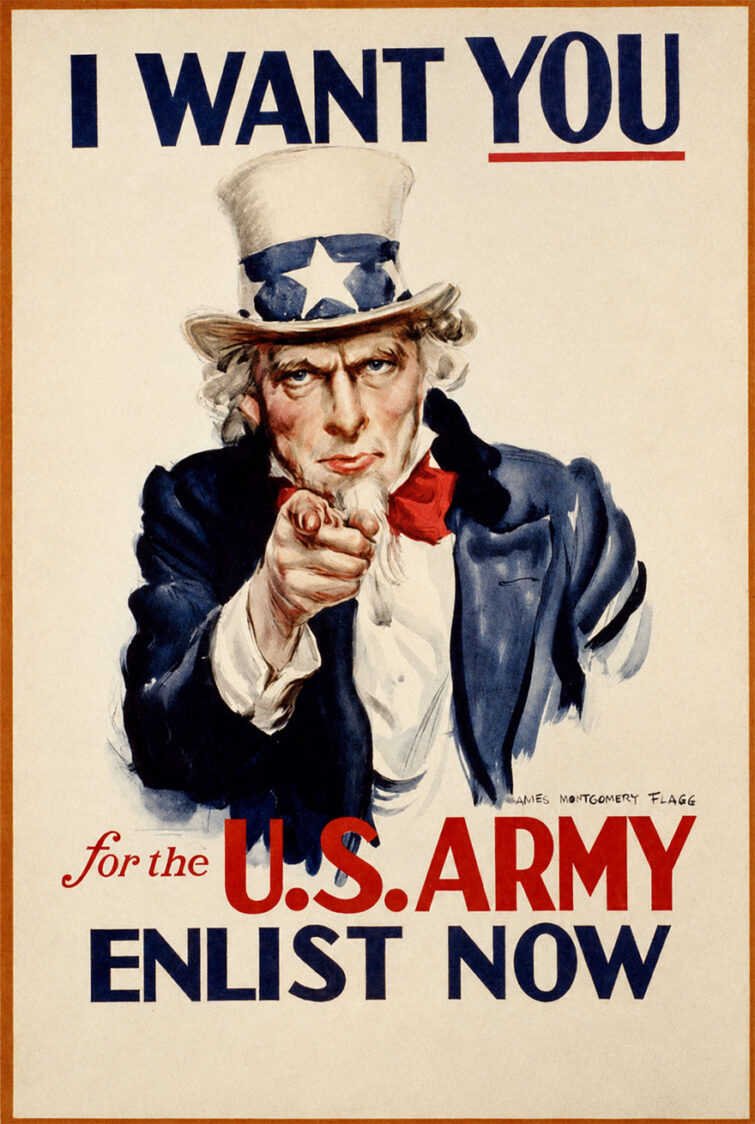
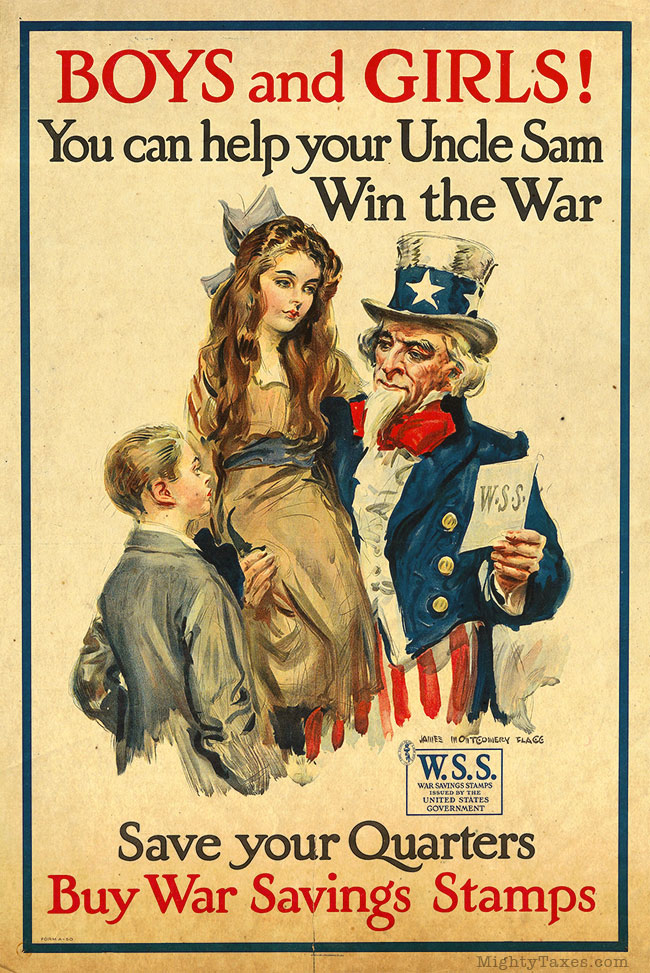
Now, Flagg had already created the definitive Uncle Sam for a 1916 magazine cover and the subsequent 1917 World War I recruitment poster. For that original version, Flagg famously used his own face in a mirror as the model. However, as the United States prepared for World War II in 1938, Flagg decided he needed to revive and update the character.
Out of a lineup of prospective models, Walter Botts was the clear winner. Why? According to Flagg, it was because Botts had “the longest arms, the longest nose, and the bushiest eyebrows”. Actually, his sleeve length was reportedly 37″, so who better to represent the “long arm” of the IRS!?
These dramatic physical features were exactly what Flagg needed to create a more forceful, theatrical silhouette for a new era of recruitment.
In fact, during one sketching session, Flagg reportedly looked at his model and asked, “Walt, what are you going to do with your long arms, sitting there?”.
Botts didn’t miss a beat and suggested the famous commanding pointing gesture. Flagg loved it, told Botts to frown, and a legendary piece of body language was reborn.
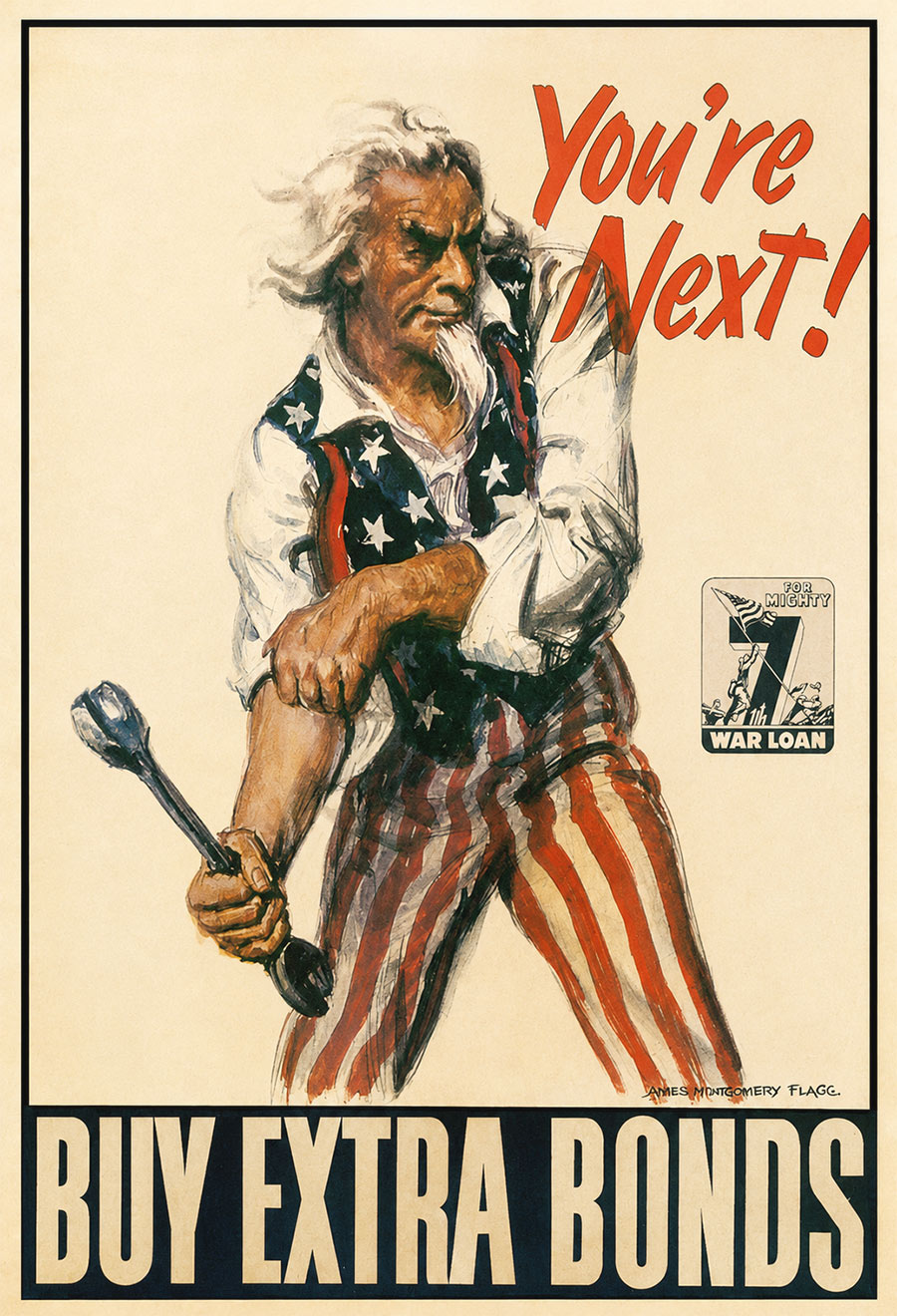
While Flagg’s own face remained the basis for Uncle Sam’s features, Walter Botts provided the posture, the shoulders, and the iconic outstretched finger that made the character feel like he was stepping right off the paper for WWII.
Walter Botts: A Life of Music (A Little Uncle Sam) and a Final Bow
Even after his stint as a national symbol, Walter Botts remained a dedicated musician. He toured the country with Doc Ross’s Jazz Bandits and shared stages with greats like Red Nichols, Harry James, and Jack Teagarden, playing at legendary venues like the Stork Club and the Waldorf Astoria. Botts moved to California City and even took a screen test in Hollywood. Although he had the striking looks of Charlton Heston, his self-reset nose reportedly kept him from movie stardom.
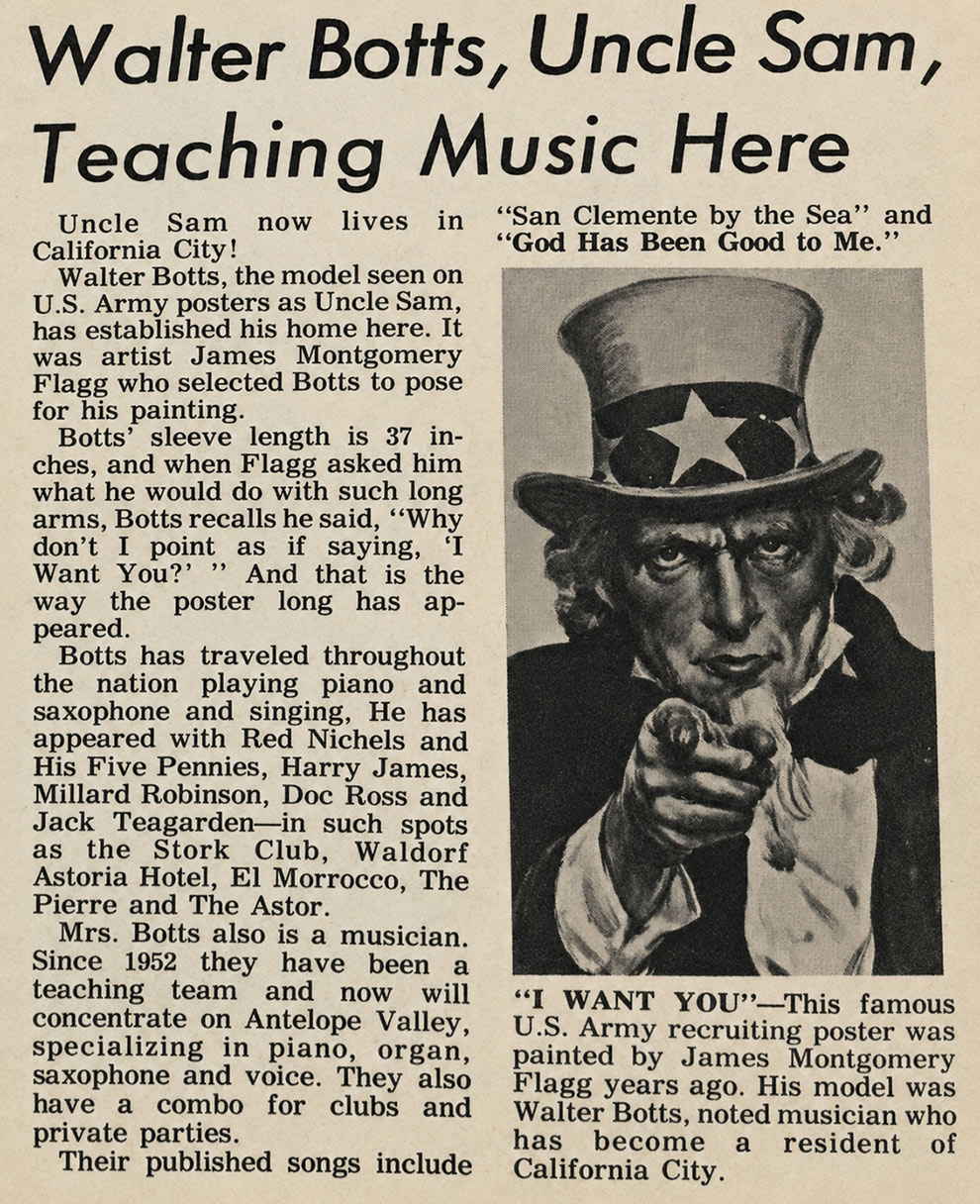
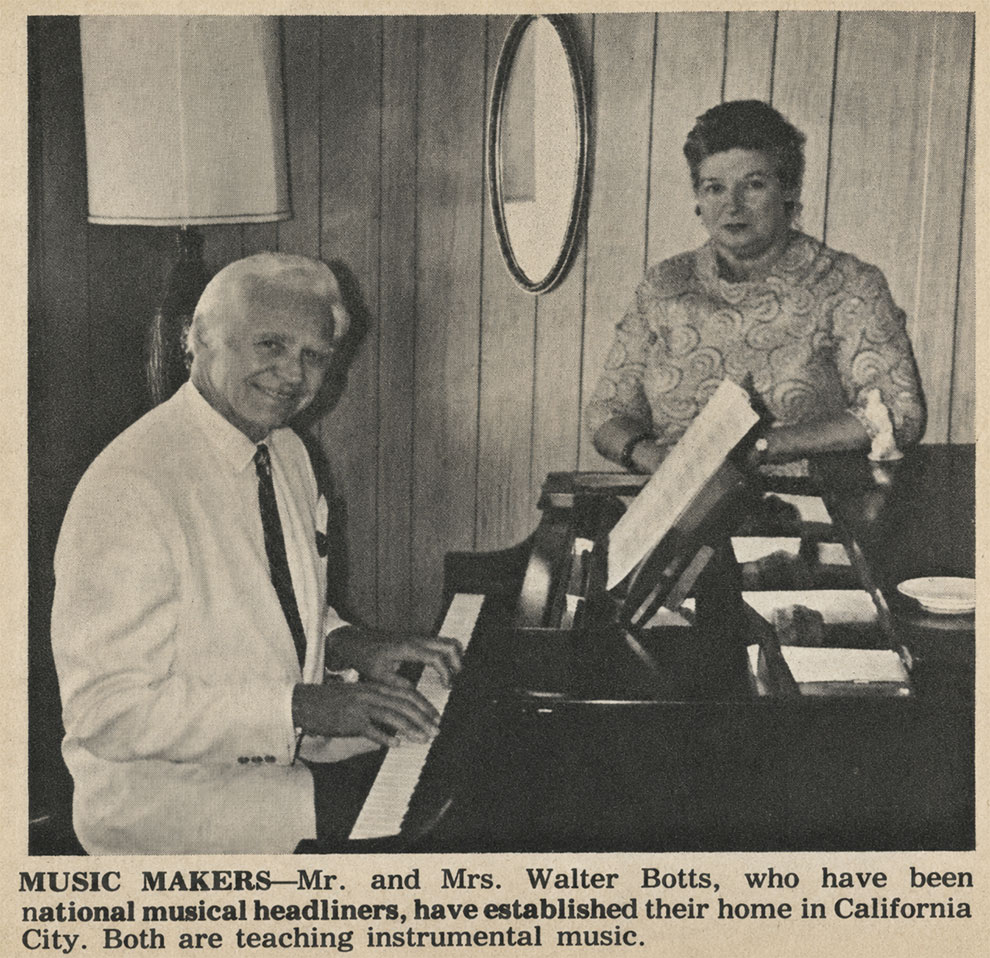
Of course, Walter Botts would always be proud of his ties to Uncle Sam. In 1970, decades after his modeling days, Botts made a final public appearance as Uncle Sam at the opening of the Uncle Sam’s Newsroom Restaurant and Lodge in Eau Claire, Wisconsin. You can see him in the photo below dressed in full Uncle Sam regalia and posing in front of the iconic poster:
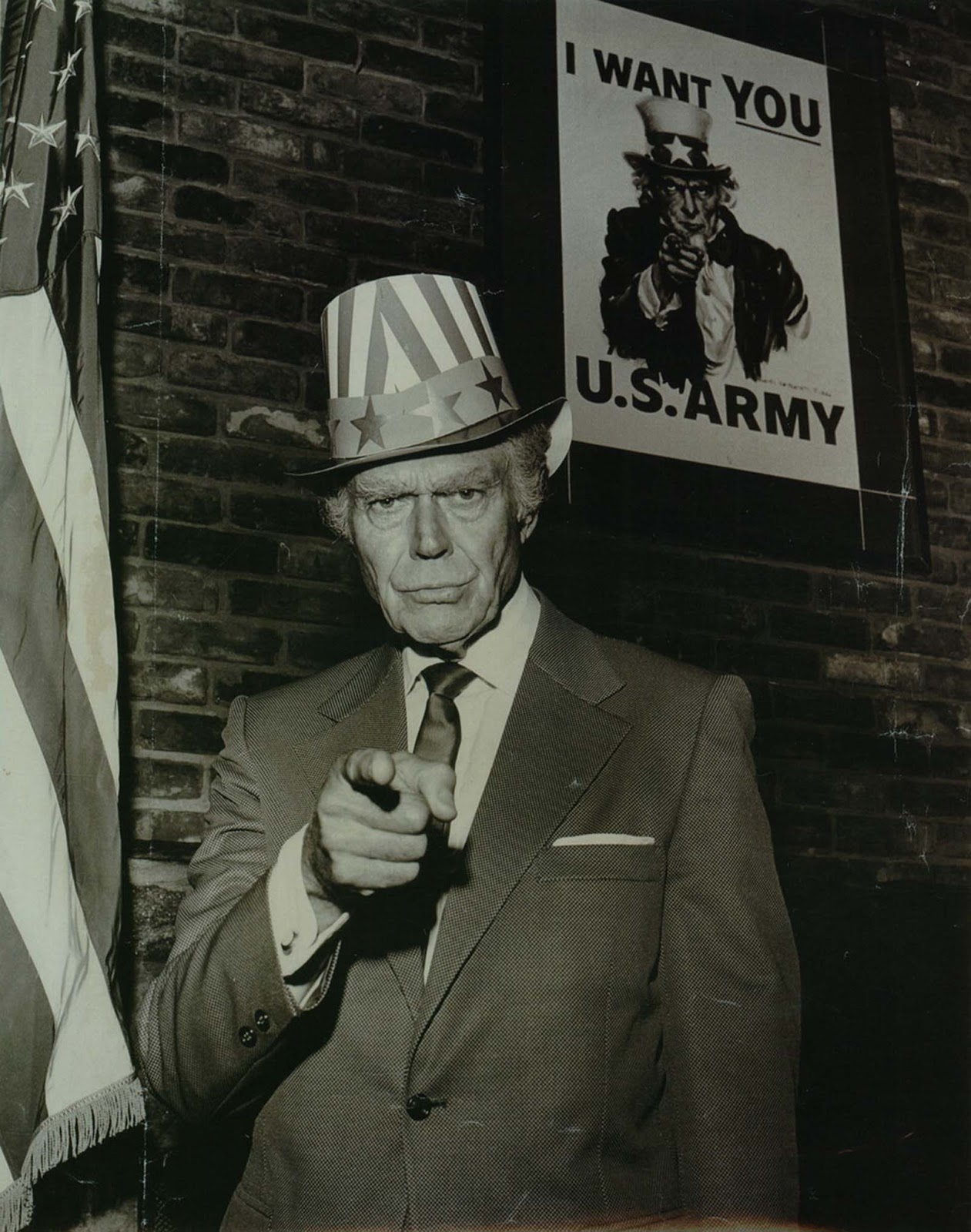
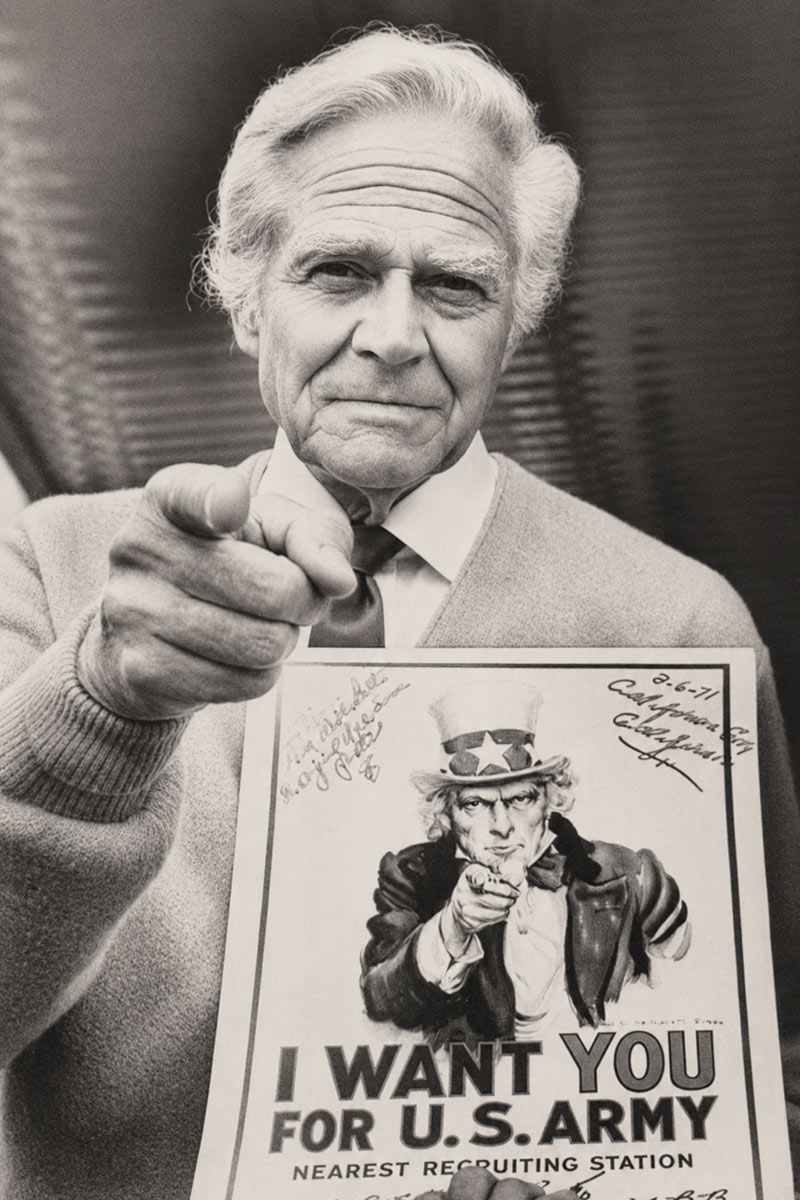
By then, he had aged into the role so perfectly that he barely needed any makeup or costumes to look the part.
Walter Botts passed away in 1972 and is buried at Forest Lawn Memorial Park in California. He may not have been the “original” face of 1917, but his physical presence and that sharp, accusing finger helped define Uncle Sam for generations. So, the next time you see that poster, remember the Hoosier jazz man who gave the “Uncle” some of his attitude!
If you have anything to add to this Walter Botts bio and tribute, please drop us a line in the comments below. Thanks for visiting NiftyTaxes.com!
Walter Botts FAQs
No. James Montgomery Flagg used his own face for the original 1917 “I Want YOU” poster. Walter Botts later posed for Flagg as Uncle Sam during sessions held around 1938.
Botts primarily modeled Uncle Sam’s body, posture, shoulders, extended arm, facial expression, and pointing gesture for later Flagg illustrations.
Archival records place his modeling sessions with James Montgomery Flagg in 1938, shortly before Uncle Sam imagery was widely revived during World War II.
Botts was from Jackson Township in Sullivan County, Indiana, and also attended Purdue University in the state. He later moved to Southern California where he is buried.
Botts died in 1972 and is buried at Forest Lawn Memorial Park in Hollywood Hills, Los Angeles County, California. . He is interred in the Tenderness section, Lot 2993, Space 3
While I was a teenager growing up in San Clemente, CA, back in the late 60s and early 70s, Walter Botts was my piano teacher.
He taught piano among other instruments and, up to that time, I had been an impressive natural talent since the age of six, who played by ear and had never learned to read music.
Walter was a pleasant semi-retired man (his wife was a sweetheart) and highly disciplined musician, but a firm if not stern task-master (like the image on his Uncle Sam poster) when it came to giving piano lessons and expecting his students to do their musical homework and make progress.
Unfortunately, I resisted this discipline and, instead of learning to read music properly, I discovered that, if I listened to Mr. Botts play the piece in question, I could fake my way into pretending I was actually reading the sheet music!
You see, it was difficult for me to focus on the slow and arduous task of learning to site-read when I could just as easily hear to piece a few times and perform it nearly perfectly.
Ol’ Mr. Botts was delighted with my “progress” until I inadvertently began to improvise and add notes that weren’t on the page, and when he caught onto my subterfuge, man, was “Uncle Sam” pissed!
He called me a “wishy-washy musician” and declared, “I Want You… out of my house!” using the same extended arm and pointed finger you see in the legendary recruiting poster.
A few days later, Walter called to apologize for his aggression (after he had a chance to cool off) but we both realized that I lacked the discipline if not the inclination to learn to read music but we remained friends until I left for the big city after high school to follow my dream (at the time) to become a professional actor.
I did, however, from time to time over the years, play the piano in bars, restaurants, and private parties for extra money (I even took a gig at a Shakey’s Pizza Parlor) but I never did learn to read music, and whenever I see an “Uncle Sam Wants You” poster, I think of Walter Botts ordering me out of his house!
TSM